Effect
Liquid glass frost
The backdrop behind the glass turns into soft colour, with a faint grain; edges still bend.
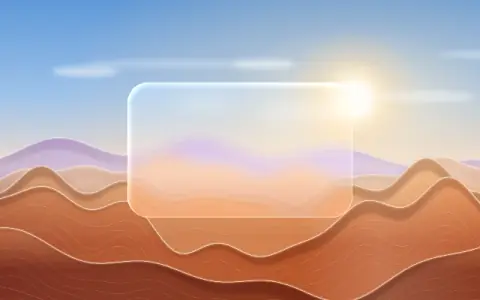
- Use in
- Large and text-heavy surfaces: dialogs, sheets, sidebars, long menus, notifications. Small controls get almost none.
- Avoid
- Frost without refraction and rim (glassmorphism card); frost so strong the colour from behind disappears; greying the backdrop.
Parameters. blur 0.5–1 (lens), 2–6 (regular), 10–20 (frost); grain ±1–2 px UV jitter; fill white 24–34 % light / black 36–46 % dark.
How it is built
- Design tool
- Figma Glass: Frost 2–20. Manual: background blur 3–24 + fill 20–30 %; optional 2–4 % noise layer.
- Web
- feGaussianBlur after feDisplacementMap inside the same filter; fallback backdrop-filter: blur() saturate(1.5).
Shader, in one line
jitter the sample position with hash noise (±1.5 px) and average 4–13 taps around the refracted position; mix with the sharp sample by the frost amount.Questions
Where should frost be used?
Large and text-heavy surfaces: dialogs, sheets, sidebars, long menus, notifications. Small controls get almost none.
When should frost be avoided?
Frost without refraction and rim (glassmorphism card); frost so strong the colour from behind disappears; greying the backdrop.
How is frost built on the web?
FeGaussianBlur after feDisplacementMap inside the same filter; fallback backdrop-filter: blur() saturate(1.5).